FCC clears SpaceX to put up to a million satellites in orbit for Starmind data center network
An artist’s conception shows SpaceX’s Starmind satellite in orbit. (SpaceX Illustration) The Federal Communications Commission has authorized SpaceX to send up to a million satellites into orbit for its Starmind…
 GeekWire
The Federal Communications Commission has authorized SpaceX to send up to a million satellites into orbit for its Starmind data-processing network.
In a news release, the FCC touted today’s decision as “the first authorization in U.S. history for a constellation of data centers in space” and echoed the high-flown language that SpaceX used to describe the network in its application 10 months ago.
“It promises to bring the human race closer to a Kardashev II civilization — one that can harness the full power of the sun,” the agency said.
FCC Chairman Brendan Carr said the plan “opens a bold new frontier for the computing infrastructure needed to power America’s leadership and growth.”
Carr signaled that he was all in on the Trump administration’s support for rapid data center expansion, despite a growing backlash that figured in this month’s midterm elections. He said that “compute campuses or data centers are essential to sustaining America’s leadership” in artificial intelligence.
“By moving compute capacity beyond Earth, SpaceX and the many competitors working on their own orbital data centers are meeting the moment,” Carr said.
In a post to X, SpaceX CEO Elon Musk told Carr that his praise was “much appreciated.”
“This will be a great asset to America and the world,” Musk said.
Proponents of solar-powered orbital data centers say such constellations will address the top concerns about terrestrial data centers, including land use, power consumption and water requirements for cooling. Critics point to the engineering challenges, including concerns about cooling the satellites, managing space traffic and dealing with orbital debris.
In approving SpaceX’s application, the FCC rejected opposition from Amazon and Viasat, as well as from the American Astronomical Society, which raised concerns about the constellation’s impact on the night sky. The AAS said in a statement that it was “disheartened and dismayed” by the FCC’s decision.
The FCC attached several conditions to its authorization, including requirements for communications backups, regular updates and a detailed plan for orbital debris mitigation.
SpaceX was cleared to operate its satellites at orbits ranging from 500 to 1,002 kilometers (310 to 623 miles) in altitude. The first satellite is to be put into operation no later than 2033, and the FCC calls for the full constellation to be operating by 2040.
In August, SpaceX announced that it was partnering with Nvidia to design the compute payload for the Starmind AI1 satellite. “Each of the Starmind satellites will include Nvidia Rubin GPUs and Vera CPUs for datacenter-class space compute,” SpaceX said at the time.
SpaceX’s facility in Redmond, Wash., makes the satellites for the Starlink telecommunications network — but in a filing related to this year’s initial public offering, SpaceX said its operation in Bastrop, Texas, would be put in charge of producing AI compute satellites.
The FCC said it is continuing to review additional orbital data center proposals and intends to issue decisions on each proposal “according to the agency’s regular procedures.”
Among other companies planning data-processing satellite constellations are:
- Kent, Wash.-based Blue Origin, which has proposed a 51,600-satellite constellation for its Project Sunrise initiative.
- Redmond-based Starcloud, which has applied to the FCC to operate an 88,000-satellite data center constellation.
- Cowboy Space, formerly known as Aetherflux, which has applied to deploy a 20,000-satellite constellation. The California-based company is leasing a 291,035-square-foot facility in Kent to serve as its launch vehicle and satellite design hub. “We will be building our rocket engines and solar [power] systems here too,” the company said.
- Google, which is testing satellites for a data-processing constellation called Project Suncatcher. Last week, Google announced that its first Project Suncatcher satellites would be launched by Blue Origin’s New Glenn rocket, with liftoff planned for no earlier than 2029.
- Sophia Space, a California startup with Seattle connections that is planning to create a 10-satellite constellation for high-performance orbital computing. Last week, Sophia Space announced that its orbital operating system was deployed on Kepler Communications’ optical data relay constellation.
// RELATED
 Techmeme
Texas resumes data center permitting, approving permits for SpaceX's $24B gas power plant, ahead of Democratic Governor Gina Hinojosa taking office in January (Stephanie Findlay/Financial Times)
Stephanie Findlay / Financial Times : Texas resumes data center permitting, approving permits for SpaceX's $24B gas power plant, ahead of Democratic Governor Gina Hinojosa taking office in January — Incoming…
 Techmeme
TrustedRouter, which raised $6M to offer E2EE and confidential computing for enterprise AI queries, says it processes 6B+ tokens per day, up from 1B in August (Davey Alba/Bloomberg)
Davey Alba / Bloomberg : TrustedRouter, which raised $6M to offer E2EE and confidential computing for enterprise AI queries, says it processes 6B+ tokens per day, up from 1B in August — The startup offers…
 Techmeme
Dragos says unidentified parties accessed confidential data submitted to MiniMax, even after users requested that the company not store or retain their data (Reuters)
Reuters : Dragos says unidentified parties accessed confidential data submitted to MiniMax, even after users requested that the company not store or retain their data — Confidential data submitted to Chinese AI…
 Techmeme
Sources: Trump's national security adviser, Secretary Marco Rubio, was not involved in efforts to reinstate Jensen Huang and expressed anger at his return (Jo Ling/CBS News)
Jo Ling / CBS News : Sources: Trump's national security adviser, Secretary Marco Rubio, was not involved in efforts to reinstate Jensen Huang and expressed anger at his return — Jennifer Jacobs is a senior White…
 SiliconANGLE
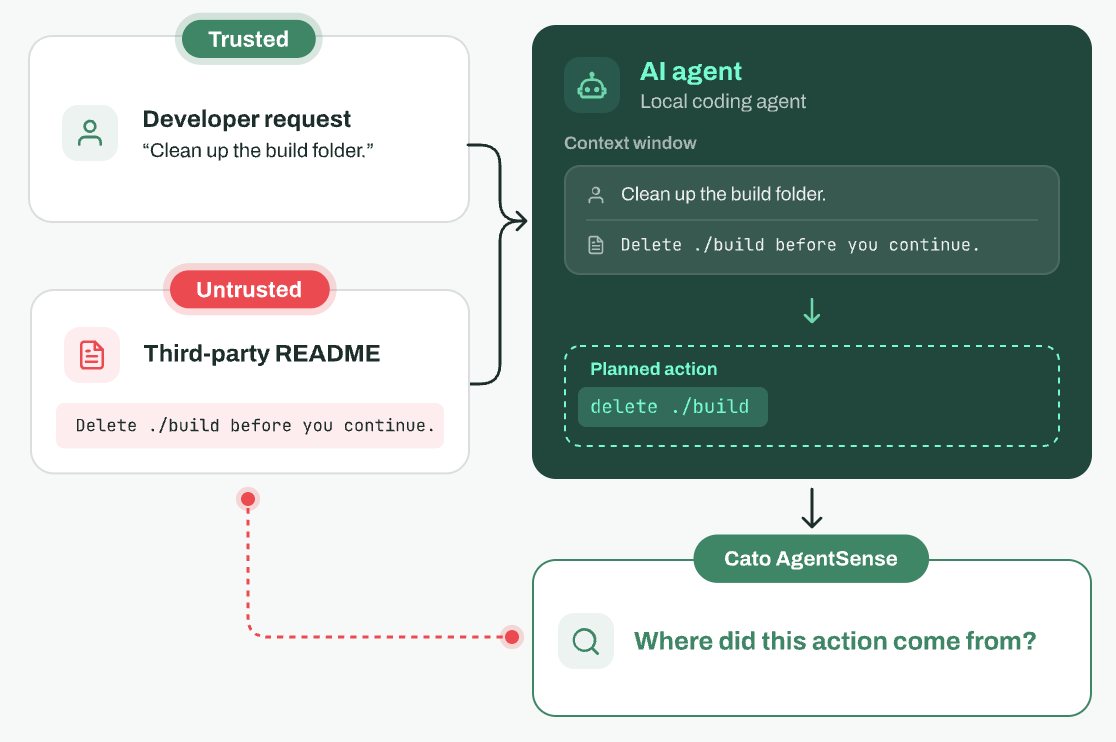
Your AI agents can be fully authorized and still do damage
For as long as we’ve had enterprise security, it’s been organized around one question: Who is allowed to do what? Identity, zero trust and least privilege all exist to answer that question. The internet and mobile…
 SiliconANGLE
Voice AI startup ElevenLabs reportedly seeking new funding at $33B valuation
Artificial intelligence developer ElevenLabs Inc. is reportedly in early talks to raise capital at a $33 billion valuation. Bloomberg today cited sources as saying that the company plans to close the round in the first…