Scientists Discovered a Mysterious Lost Human Species
Welcome back to the Abstract! Here are the studies this week that reconnected with old relatives, broke the quasar frontier, went deep, and worked on their
 404 Media
Welcome back to the Abstract! Here are the studies this week that reconnected with old relatives, broke the quasar frontier, went deep, and worked on their cores.
First, scientists unearth teeth in China that belonged to an unidentified lineage of humans that lived 100,000 years ago. Then: a new cosmic distance record, DEEP-SEA EXPLOSIVE VOLCANISM, and a swim in alien seas.
As always, for more of my work, check out my book First Contact: The Story of Our Obsession with Aliens, or subscribe to my personal newsletter The BeX Files.
New human just dropped!
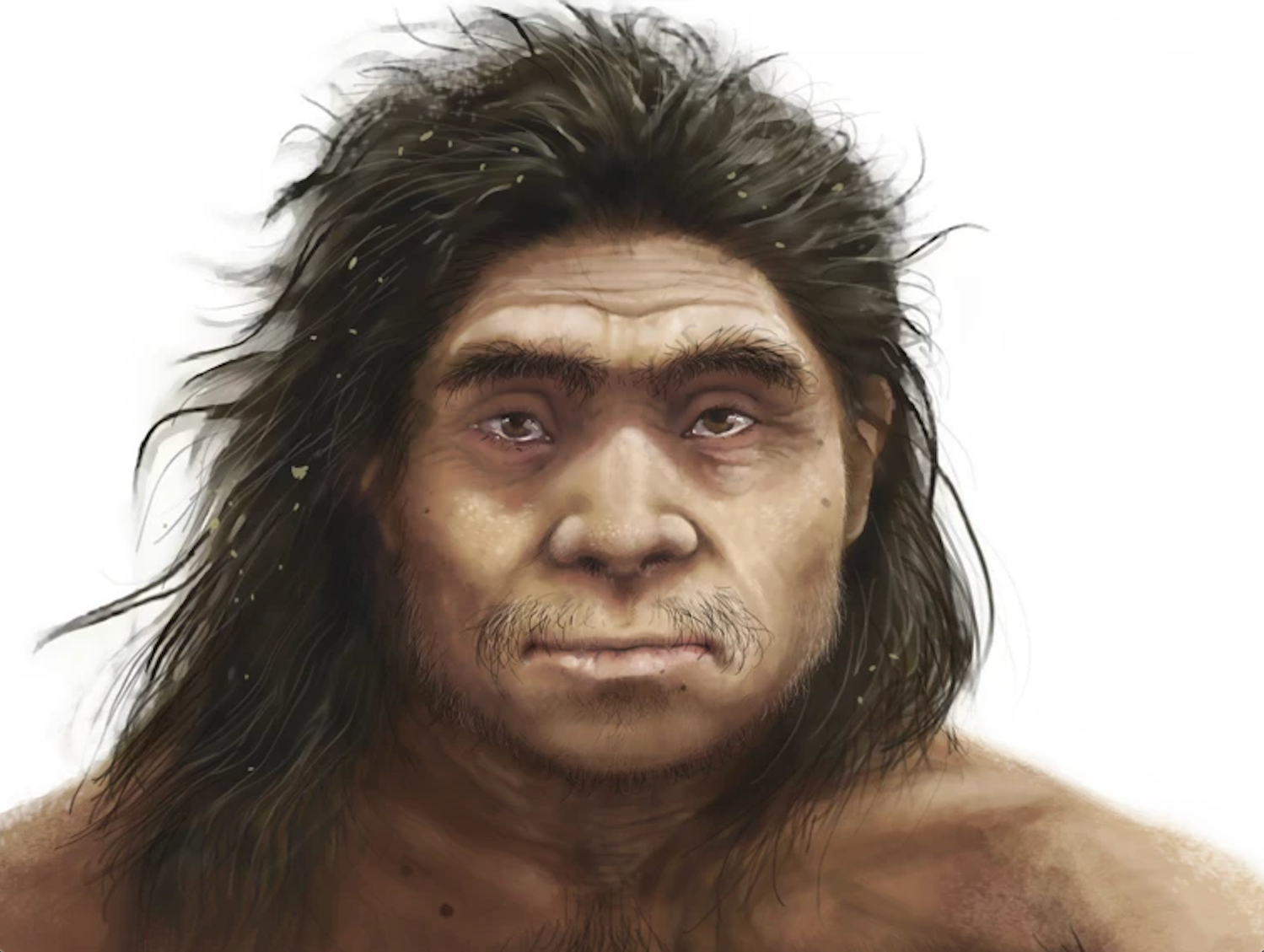
Scientists have discovered a mysterious human lineage that lived in China 100,000 years ago and does not appear to belong to known species such as Neanderthals, Denisovans, or our own group, Homo sapiens. In other words: this could be a completely new type of human, unknown to science.
Modern humans are the sole survivors of what was once a diverse group of apes in the Homo genus, known as hominins. The last of our known fellow humans, Neanderthals and Denisovans, went extinct about 40,000 and 30,000 years ago, respectively. This sprawling family tree of extinct humans raises the question of how many of our cousins walked our planet but left few traces.
This is especially true in warm humid climates that aren’t conducive to fossilization, such as southern China. But despite the long odds, researchers have discovered several hominin teeth in two cave sites, Chuanshandong and Longchuandong, in the subtropical Guangxi region.
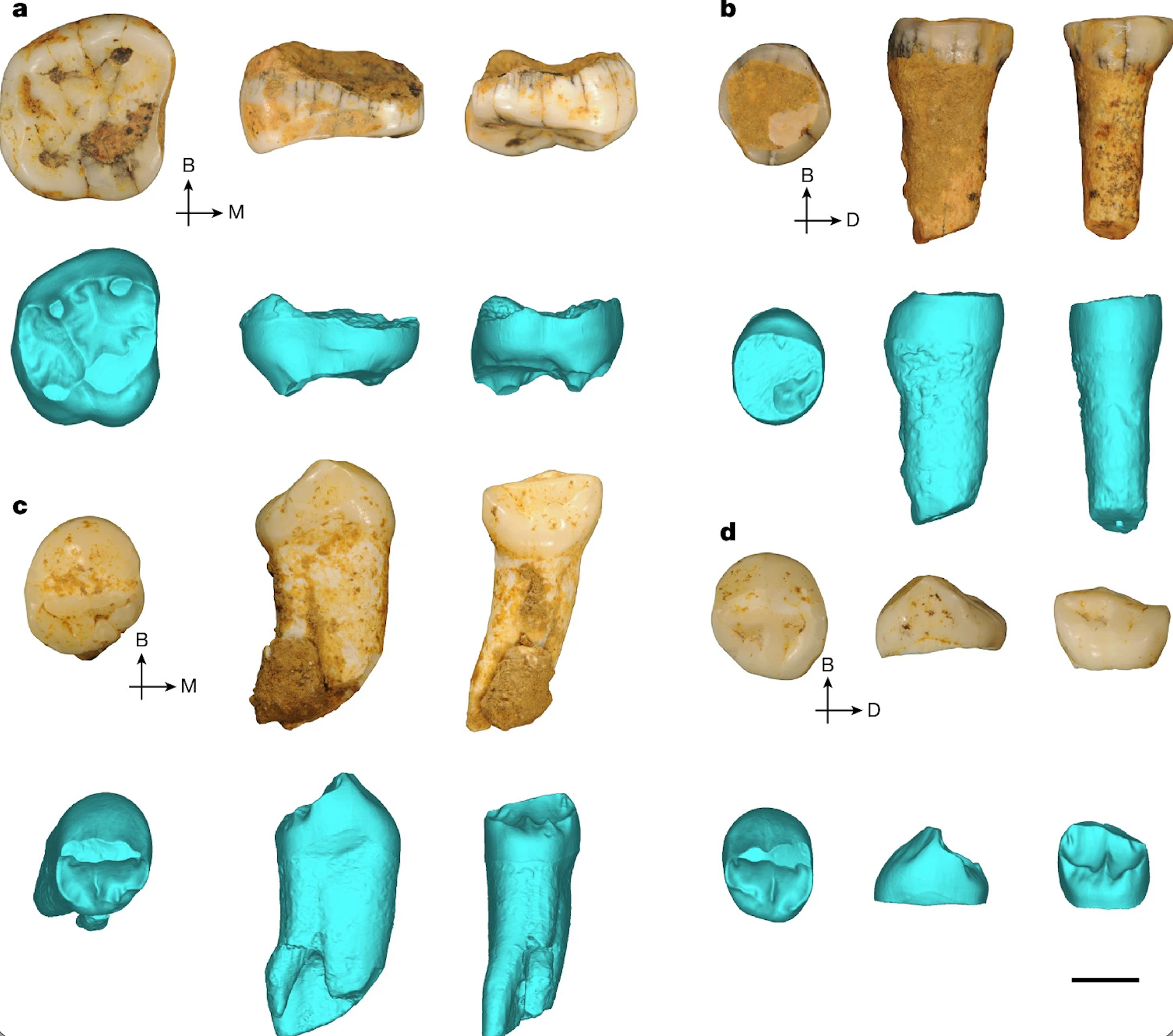
The Longchuandong cave teeth likely belonged to Denisovans, a lineage that split from Neanderthals about 400,000 years ago. The Chuanshandong teeth were another story, however. By studying the shape and preserved proteins in the teeth, the team found that they don’t match up with any known hominin, suggesting they could belong to a new form of extinct archaic human.
“The scarcity of hominin fossils from subtropical southern China during the Middle to Late Pleistocene transition has hampered our understanding of the geographical distribution of Denisovans and the potential existence of other Homo lineages in mainland East Asia,” said a team co-led by researchers based in China and Spain.
“The findings of this study show that the subtropical area in southern China may have hosted multiple populations of archaic Homo during the Middle and Late Pleistocene,” the team concluded. “In addition to the previously suggested Neanderthal-related hominin at Maba in the adjacent Guangdong Province, we have now identified both a Denisovan-affinity hominin and another unresolved non-sapiens archaic Homo in this region.”
The team cautioned that the find is still “preliminary” and it will take more fossils and research to determine the identity of the Chuanshandong hominin, including whether it belongs to a known lineage, such as Homo erectus, or is a novel species. Regardless, it’s clear that there is much more to learn about our long-lost cousins, and why we are the only one left among them.
In other news…
A blast from the very, very, very distant past
Meet Dún Aonghasa, the most distant quasar ever glimpsed by humans. Since peering deep into space is also a way of looking back in time, this quasar—a type of ultra-radiant galactic core—is from a region where the universe was only 630 million years old.
Quasars are extremely energetic galactic cores that barf out more continuous light than anything in the universe. Dún Aonghasa, officially known as J1504+6252, is the first quasar ever spotted beyond a “redshift” of 8, which is a measurement that correlates to light shifting into the red end of the spectrum as it travels across immense stretches of time and space before reaching Earth.
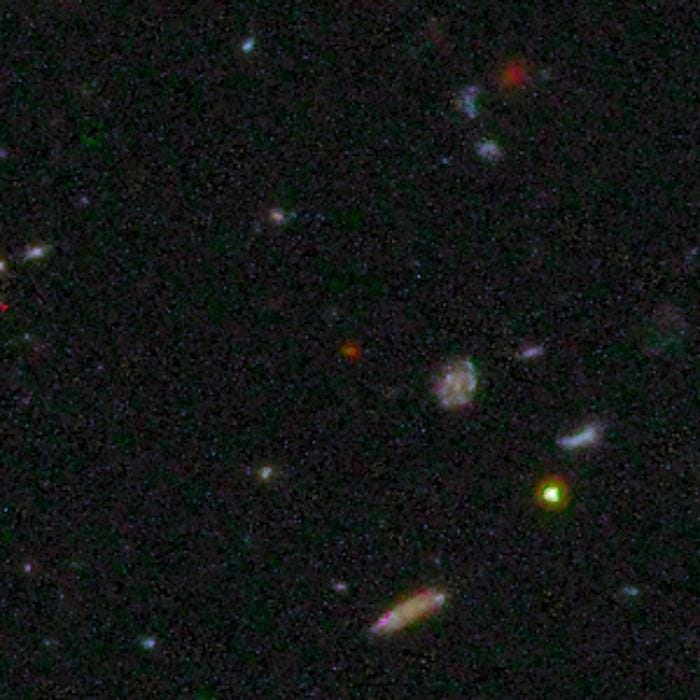
The quasar was spotted by Europe’s Euclid telescope, and the discovery pushes “the quasar redshift frontier [back] by 39 million years, or approximately 6 percent of the age of the Universe at that epoch,” said researchers led by Julien Wolf of the Max Planck Institute for Astronomy, as part of the wider Euclid Consortium.
The quasar is named after a prehistoric cliff-top fort in Ireland “where land gives way to a vast oceanic horizon to the west,” the team said. “Dún Aonghasa evokes both a boundary and an invitation: an apparent end at the edge of the cliff, with much still hidden beyond it. Likewise, J1504+6252 stands at the current observational frontier of quasars, illuminating the threshold to even earlier times still waiting to be explored.”
Bonus points to the team for getting all poetic about it, though it raises the bar for whoever finds an even more distant quasar. You can’t just call it “Tom” or whatever—we expect lyrical metaphors in our quasar names now.
A new low for volcanoes
We will move now from the most distant reaches of the universe to the deepest abyss in Earth’s oceans. It’s just that kind of week!
Extending to nearly 6.8 miles under the Pacific Ocean, Challenger Deep is the deepest region in the seas, which makes it a tantalizing destination for submersible exploration (occasionally starring James Cameron).
In late 2024, scientists were remotely exploring a trenchwall in the Challenger Deep forearc segment (CHFS) with the uncrewed vehicle Jason/Medea when they discovered pyroclastic rocks forged by volcanism. Even though these volcanic layers were found at a shallower depth of 3.7 miles, they still represent the deepest known evidence of explosive volcanic activity ever found in the ocean.
“A significant discovery includes the recovery of the deepest known pyroclastic deposits” at 6,000 meters or 3.7 miles “providing evidence for a distinct style of deep-sea explosive volcanism,” said researchers led by Robert J. Stern, professor emeritus at the University of Texas at Dallas.
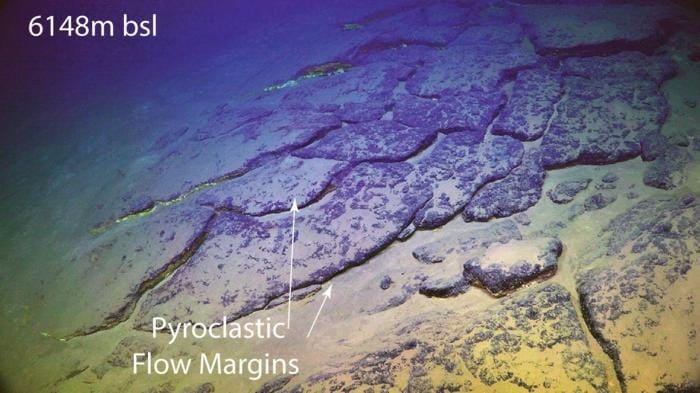
“These findings suggest the CDFS is a tectonically unstable and magmatically active zone, offering critical insights into the nature of the upper mantle, the behavior of volatile-rich magmas erupted at high pressure, and why the Challenger Deep is so deep,” the team said.
Since Jason/Medea is only equipped to venture to depths of 3.7 miles, the team floated the idea of crews following these volcanic breadcrumbs further into the abyss with ”ultra-deep” submersibles. Explosive volcanism may extend much deeper than currently known, for those brave enough to risk awakening Cthulhu.
Journey to the center of Enceladus
Life thrives at Challenger Deep, but could it also exist in extraterrestrial oceans like the one hidden inside Saturn’s moon Enceladus? This question has sparked a host of interesting studies that have mostly come to the same conclusion: maybe!
In the newest addition to this tradition, scientists analyzed how the chemical composition of the moon’s core might impact its habitability. The team modelled the production of life-essential elements collectively known as CHNOPS—carbon, hydrogen, nitrogen, oxygen, phosphorus, and sulfur—with three simulated compositions: primordial, composite or slightly modified, and non-primordial.
While we already have strong evidence that Enceladus contains the complete sextet, the study suggests that primordial or composite cores are able “to justify the production of all the essential CHNOPS elements,” according to the study.
“Due to the growing evidence of a global water ocean with large biological potential in its interior, the Saturn moon Enceladus has been subject to continuous studies,” said researchers led by Alberto Flandes of the National Autonomous University of Mexico. The team found that “a primordial core composition would favour the production of methane in considerably larger concentrations, while a composite core would favour the production of sulphate ions and hydrogen sulfide in larger concentrations.”
To trot out one of my fondest hobbyhorses, all I want for Christmas is a life-seeking mission to Enceladus.
Thanks for reading! See you next week.
// RELATED
 Techmeme
COO Jen Wong says 80%+ of Reddit's monetization comes from logged-in users whose time on the site rises from 5 min/day in year one to 40 min/day by year five (Eleanor Pringle/Fortune)
Eleanor Pringle / Fortune : COO Jen Wong says 80%+ of Reddit's monetization comes from logged-in users whose time on the site rises from 5 min/day in year one to 40 min/day by year five — Reddit boasts engagement…
 Techmeme
US insurance giant Allstate has been suffering an outage since November 23, affecting its website and app; the company hasn't said what is causing the outage (Jean Eaglesham/Wall Street Journal)
Jean Eaglesham / Wall Street Journal : US insurance giant Allstate has been suffering an outage since November 23, affecting its website and app; the company hasn't said what is causing the outage — The multiday…
 TidBITS
1Password Breach Exposes Some Customer Names and Email Addresses, but Not Passwords
An attacker who took over a 1Password employee’s GitHub account stole some customers’ names, email addresses, and account metadata. 1Password’s design kept vault contents out of reach, but watch out for phishing…
 Droid Life
Get Your Meta Smart Glasses at Walmart, Save $120
Walmart is looking like the best place to snag a new pair of Meta smart glasses this Black Friday , with prices down by a high of $120. That brings the glasses into the realm of realistic, as some pairs are usually…
 Techmeme
SAP confirms a cybersecurity incident; report: hackers obtained its staffers' authentication tokens, letting them copy and alter source code stored on GitHub (Eduard Kovacs/SecurityWeek)
Eduard Kovacs / SecurityWeek : SAP confirms a cybersecurity incident; report: hackers obtained its staffers' authentication tokens, letting them copy and alter source code stored on GitHub — SAP has detected…
 GeekWire
Seattle skier vibe-codes ‘Pow Pow,’ a new snow report app that doesn’t sugarcoat the conditions
Screens from the Pow Pow app show a resort snow report with a five-star Pow Rating, detailed “Nerd stuff” charts on snowfall and snow quality, and home-screen widgets for Washington state resorts. (Pow Pow Images)…